
Choosing the right adhesive is one of the most important factors in ensuring the quality and durability of tile installation. Today, tile adhesives are widely used in construction projects as an alternative to traditional installation methods, thanks to their different formulations, ease of application, and technical properties.
But what exactly is tile adhesive? What types are available, and what should you consider when choosing the right one? In this article, we explore the main types of tile adhesive and their applications.
What Is Tile Adhesive?
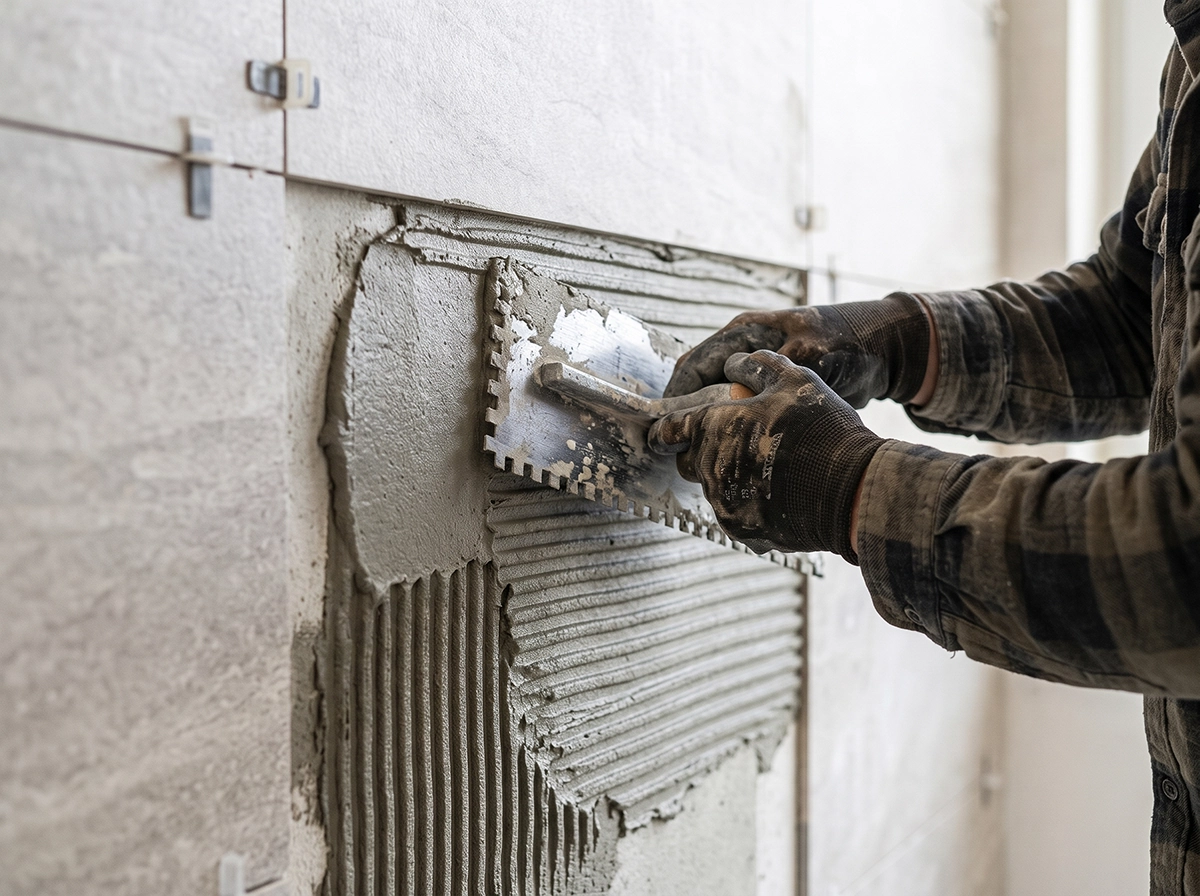
Tile adhesive is a bonding material used to install ceramic tiles, porcelain tiles, and other tile products on surfaces such as floors and walls. It creates a bond between the tile and the substrate, helping keep the tiles securely in place.
Tile adhesives are available in different formulations, and choosing the right product depends on factors such as tile type, installation area, substrate conditions, and environmental requirements.
Types of Tile Adhesive
1. Cement-Based Powder Adhesive
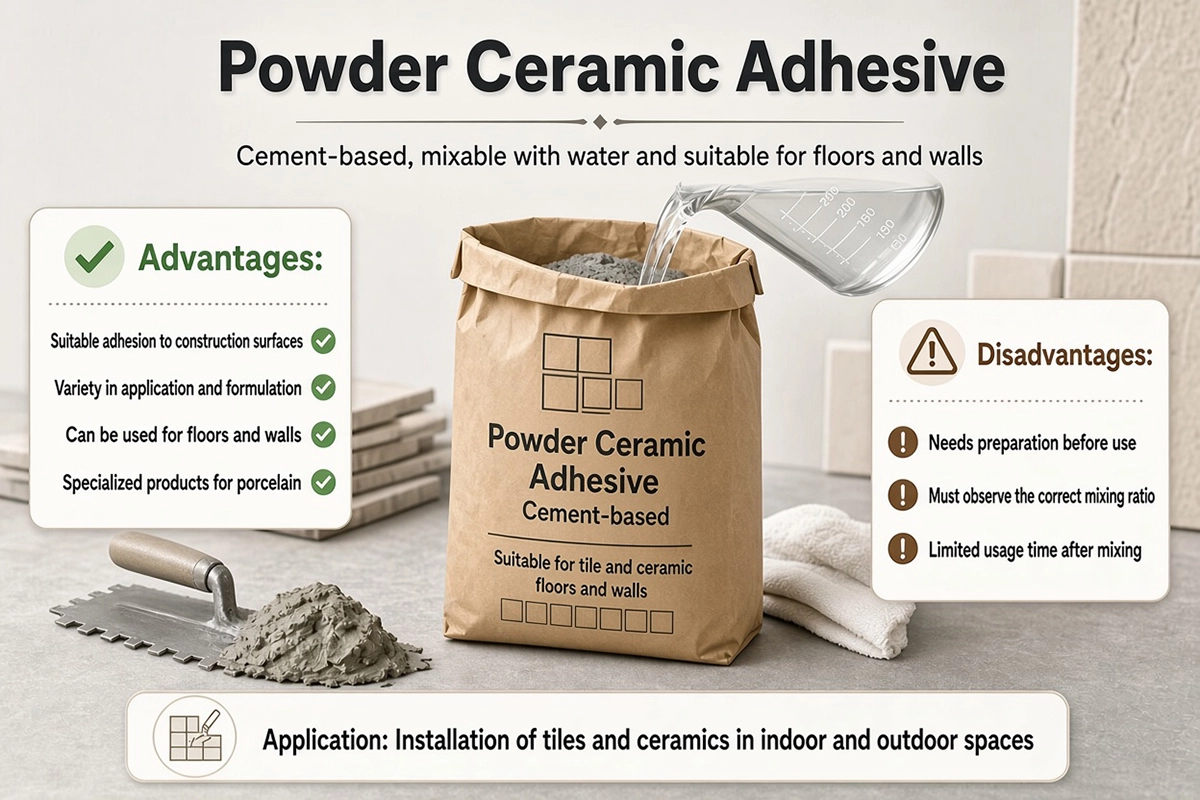
Powder tile adhesive is generally cement-based and must be mixed with a specified amount of water or a designated additive before application. These adhesives are available in different formulations, including products specifically designed for porcelain tile installation.
Advantages:
- Good bonding performance on suitable construction surfaces
- Wide range of formulations and applications
- Suitable for floor and wall installations, depending on product specifications
- Specialized formulations available for porcelain tiles
Disadvantages:
- Requires preparation and mixing before use
- Accurate mixing ratios must be followed
- Limited working time after mixing
Applications: Installing ceramic and porcelain tiles in indoor and outdoor areas, depending on the product's technical specifications.
2. Ready-to-Use Paste Adhesive
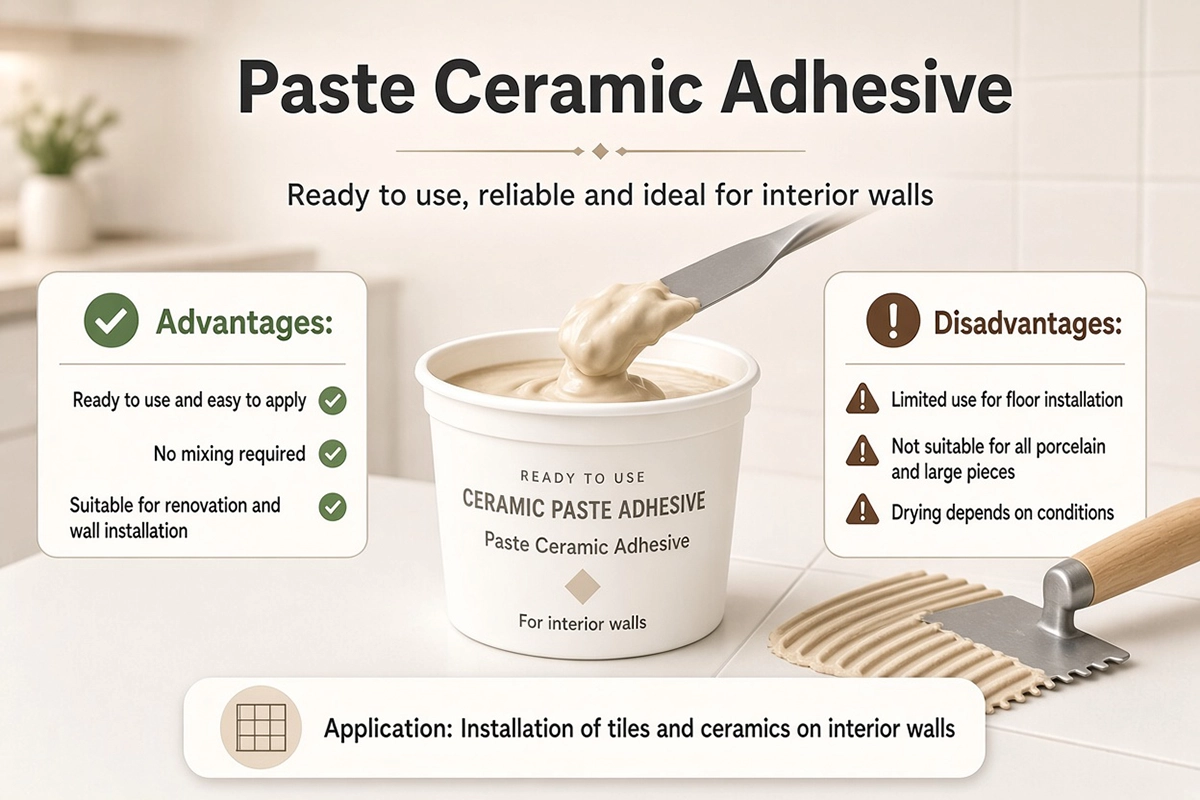
Paste tile adhesive is supplied ready to use and generally does not require mixing with water. It is commonly used for installing ceramic tiles on interior walls.
Advantages:
- Ready to use and easy to apply
- No mixing required
- Suitable for certain wall installations and renovation projects
Disadvantages:
- Limited suitability for some floor applications
- Not suitable for all porcelain tiles or large-format slabs
- Drying time depends on environmental conditions
Applications: Installing ceramic tiles on interior walls and other surfaces approved by the manufacturer.
3. Epoxy and Reactive Resin Adhesives
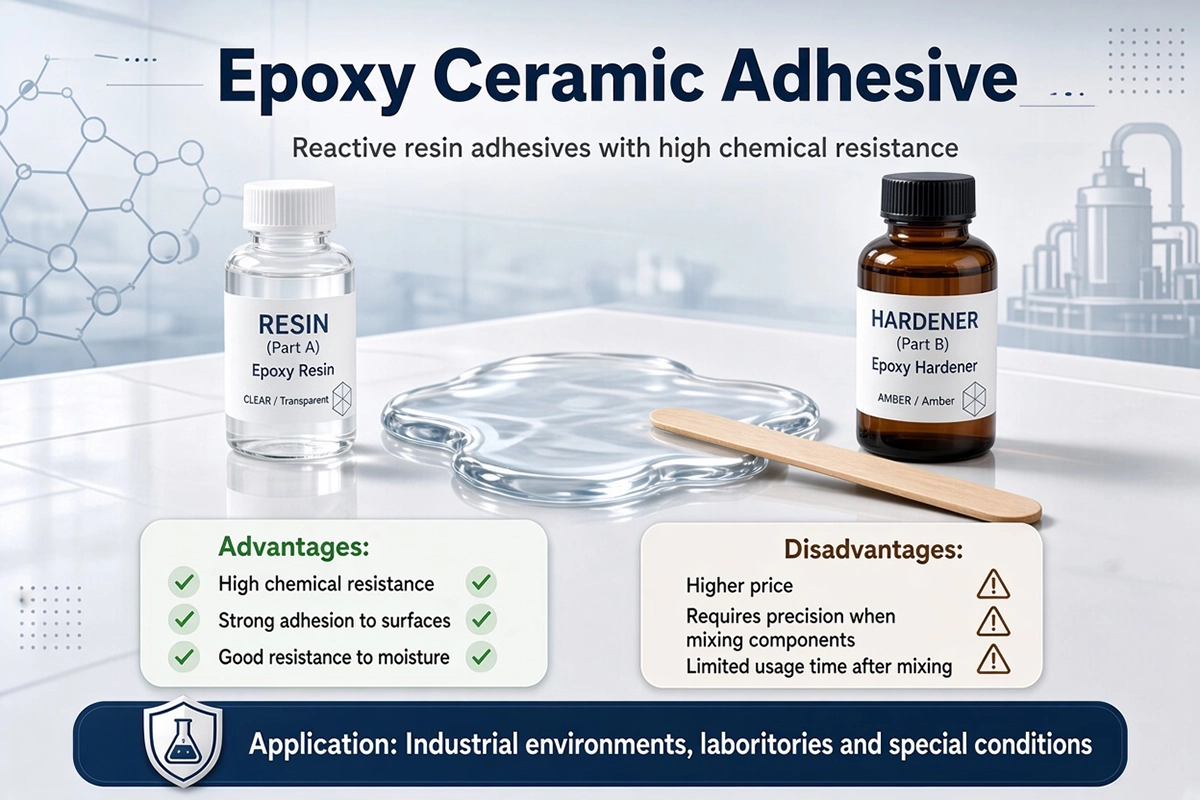
Reactive resin adhesives harden through a chemical reaction. Epoxy adhesive is one of the best-known types in this category and is often used in projects requiring chemical resistance or specialized bonding performance.
Advantages:
- High chemical resistance in suitable products
- Strong bonding to approved surfaces
- Good moisture resistance
Disadvantages:
- Higher cost compared with many conventional adhesives
- Accurate mixing of components is essential
- More demanding application and limited working time after mixing
Applications: Certain industrial and laboratory environments, as well as areas with specific performance requirements.
Comparison of Tile Adhesive Types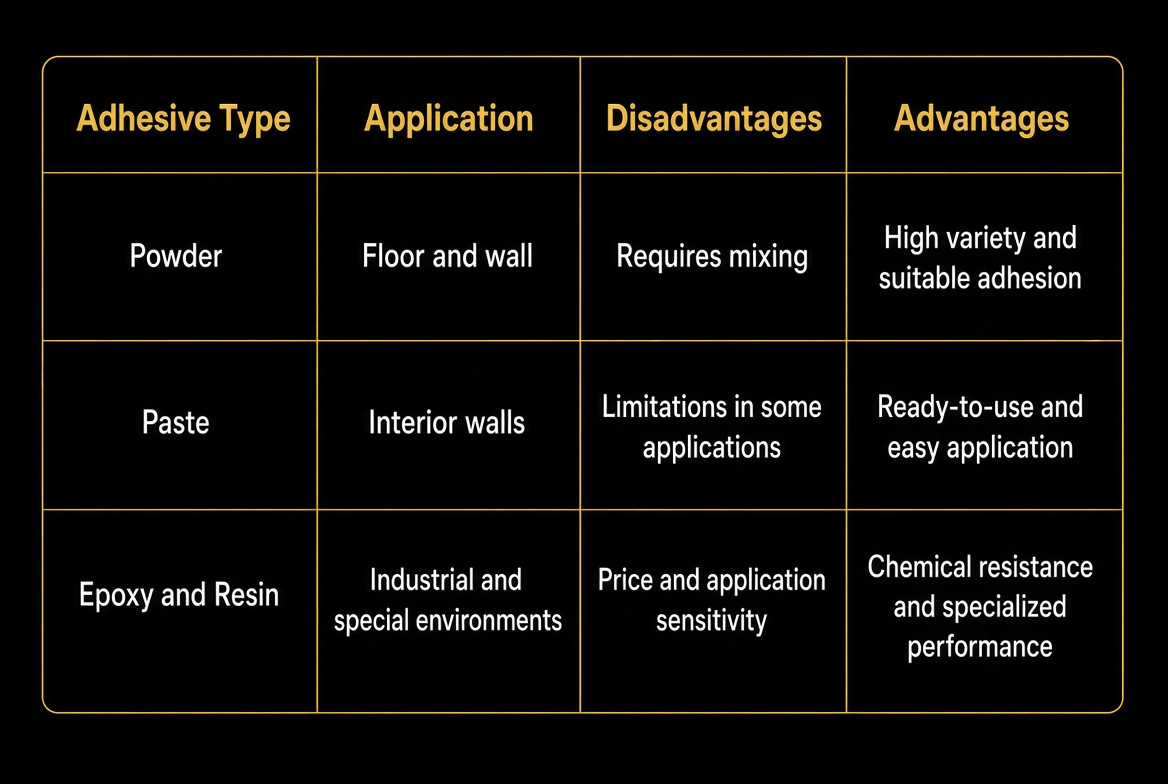
How to Choose the Right Tile Adhesive
Choosing the right adhesive requires considering several important factors:
- Tile type: Porcelain tiles have low water absorption and require an adhesive specifically approved for porcelain installation.
- Tile size: Large tiles and porcelain slabs require an adhesive and installation method suitable for their dimensions and weight.
- Installation area: Floor and wall installations, indoor and outdoor environments, and moisture exposure all influence adhesive selection.
- Substrate condition: The installation surface should be sound, clean, and properly levelled.
- Technical specifications: Always check the manufacturer's instructions and product data before installation.
If you are planning to use porcelain slabs in your project, we recommend reading our guide on Selecting and Installing Porcelain Slabs for Interior Floors and Walls.
For more information about professional installation methods, tools, and techniques for large-format slabs, explore our article on Advanced Installation Techniques for Porcelain Slabs on Floors and Walls.
Frequently Asked Questions About Tile Adhesive
1. Can tile adhesive be used for porcelain tiles?
Yes. However, you should choose an adhesive whose technical specifications explicitly approve it for porcelain tile installation. Not all tile adhesives are suitable for this purpose.
2. What is the difference between powder and paste tile adhesive?
Powder adhesive is generally cement-based and must be mixed with water or a designated additive before use. Paste adhesive is ready to use and is mainly intended for certain interior wall applications.
3. Can tile adhesive replace waterproofing?
No. Tile adhesive is designed to bond tiles to the substrate and cannot replace a waterproofing system in areas such as bathrooms and shower rooms.
Conclusion
Tile adhesives are available in cement-based powder, ready-to-use paste, and reactive resin formulations. Each type has specific properties and applications. The right choice depends on the tile material, tile dimensions, installation area, and substrate conditions.
When working with porcelain tiles and large-format slabs, selecting the appropriate adhesive and following proper installation procedures become especially important. The right combination of tile quality, adhesive performance, and installation technique helps create a durable and visually appealing surface.