
Tile or Ceramic: Which Is Better? Differences, Applications, and a Selection Guide
Choosing between tile and ceramic is one of the first decisions to make when renovating or designing a new space. Many people assume that tiles and ceramics are not significantly different from one another, but these two products can differ in terms of raw materials, manufacturing process, water absorption, durability, applications, and even the environments where they are best suited.
If you are planning to purchase tiles or ceramic products for your kitchen, bathroom, restrooms, living room, hallway, or other areas of a building, understanding these differences can help you make a choice that suits your needs, budget, and interior design style.
In this article from Romance Tile, we explore whether tile or ceramic is the better choice, where each product can be used, and what factors you should consider when making your purchase.
What Is the Difference Between Tile and Ceramic?
The main differences between tile and ceramic products are related to their raw materials, firing process, and technical characteristics of the body.
In general, tiles are commonly used for wall coverings and areas with lower levels of pressure and foot traffic, while many types of ceramic products offer higher durability and can be suitable for floors and high-traffic areas.
However, you cannot determine the quality of a product simply by whether it is called a “tile” or “ceramic.” Technical specifications, body type, water absorption, thickness, glaze, abrasion resistance, and intended application are much more important factors to consider.
What Is Tile?
Tile is one of the most widely used materials for covering interior building surfaces and is available in a wide range of models, sizes, colors, and designs.
Wall tiles are a popular choice for kitchens, bathrooms, and restrooms due to their suitable weight and structure. Their wide variety of designs and colors has also made tiles an important element in interior design.
Key Features of Tile
- A wide variety of designs and colors
- Suitable for different interior design styles
- Ideal for wall applications
- Easy to clean
- Suitable moisture resistance in appropriate models
- Easy to coordinate with different types of flooring
One of the most common applications of tile is on kitchen walls, where surfaces may be exposed to moisture, steam, stains, and grease.
What Is Ceramic?
Ceramic is also part of the family of products used for covering building surfaces and is manufactured in different models for floors, walls, and interior and exterior spaces.
Ceramic products designed for flooring are generally a practical choice for living rooms, kitchens, hallways, and many residential and commercial spaces due to their technical characteristics and durability.
When choosing ceramic flooring, in addition to appearance, you should consider factors such as abrasion resistance, slip resistance, water absorption, thickness, and intended application.
Tile or Ceramic: Which Is Better?
The answer depends on where the product will be used.
In reality, it is not possible to say that tile is always better than ceramic, or vice versa. The right product should be selected based on environmental conditions, foot traffic, moisture levels, surface type, and the desired design.
For example, if your goal is to cover a kitchen wall, a high-quality wall tile can be an excellent choice. However, for a living room floor or a hallway with heavy foot traffic, you should generally choose a product with technical specifications suitable for flooring.
Here are some of the most frequently asked questions:
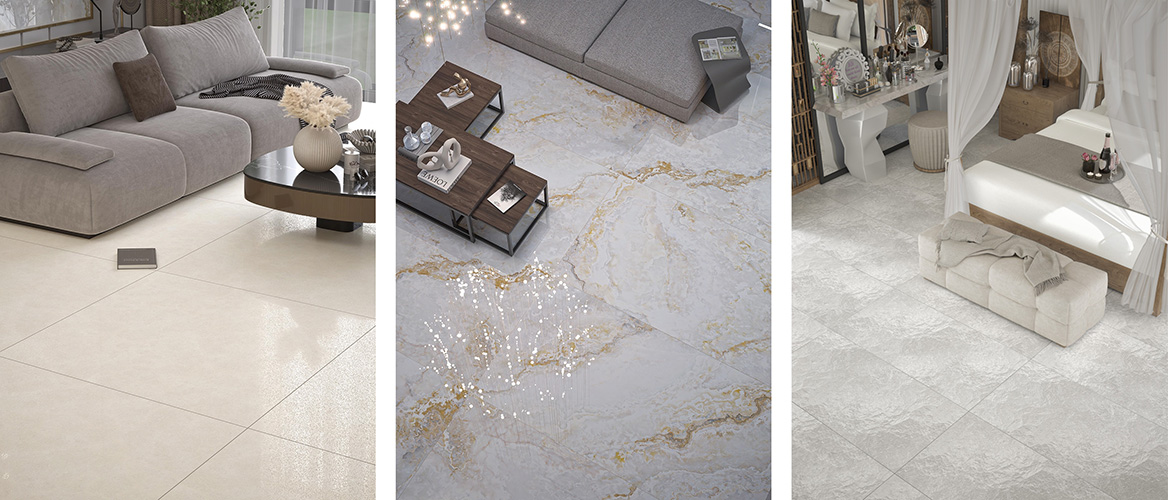
For Flooring, Should You Choose Tile or Ceramic?
Building floors are exposed to more pressure, impact, foot traffic, friction, and abrasion than walls. Therefore, choosing the right product for flooring is particularly important.
When selecting ceramic flooring, it is best to pay attention to the following factors:
Abrasion Resistance
If the floor is located in a high-traffic area, abrasion resistance is particularly important. Hallways, kitchens, stores, and commercial spaces generally experience more foot traffic than bedrooms.
Slip Resistance
For bathrooms, restrooms, terraces, and areas that come into contact with water, choosing a surface with appropriate slip resistance is especially important.
Water Absorption
In humid environments, a product suitable for the specific conditions of the space should be selected. Water absorption is one of the key technical specifications that should be checked before purchasing.
Size and Thickness
The size of ceramic tiles affects not only the overall appearance of a space but also the installation process. Large-format ceramics can create a more seamless and uniform appearance, but their installation requires more precise substrate preparation and professional installation.
Should You Choose Tile or Ceramic for Walls?
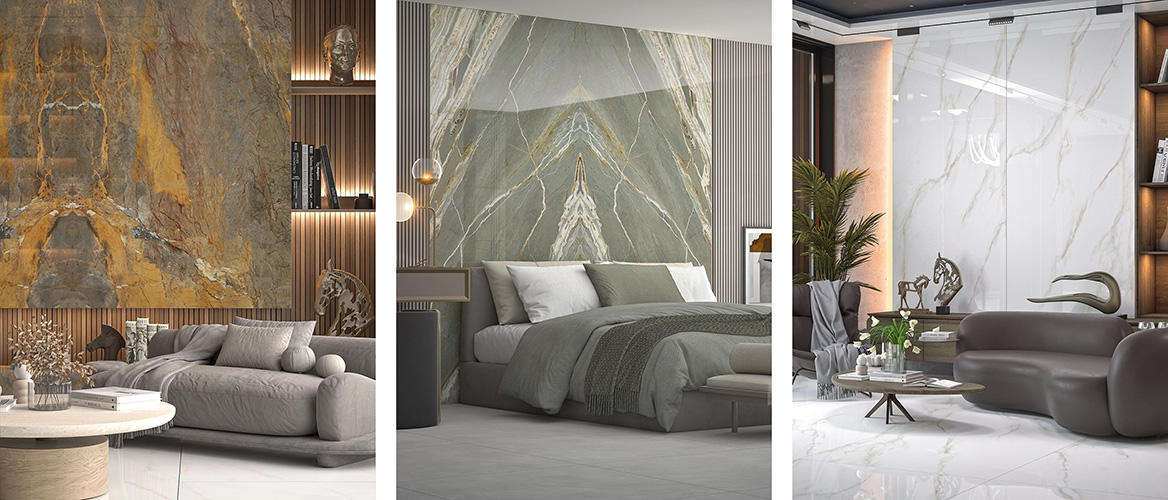
When it comes to walls, there are many different options to choose from. In addition to technical specifications, the appearance and design of the product also play an important role.
In kitchens, wall tiles are a popular choice due to their easy maintenance and wide variety of designs. In bathrooms and restrooms, suitable wall products can also be used according to the moisture conditions of the environment.
When choosing wall tiles, it is best to consider the following factors:
- Color coordination with cabinets and flooring
- Interior design style
- Size of the space
- Moisture levels
- Ease of cleaning
- Glaze quality
- Tile size and layout patter
Should You Choose Tile or Ceramic for the Kitchen?
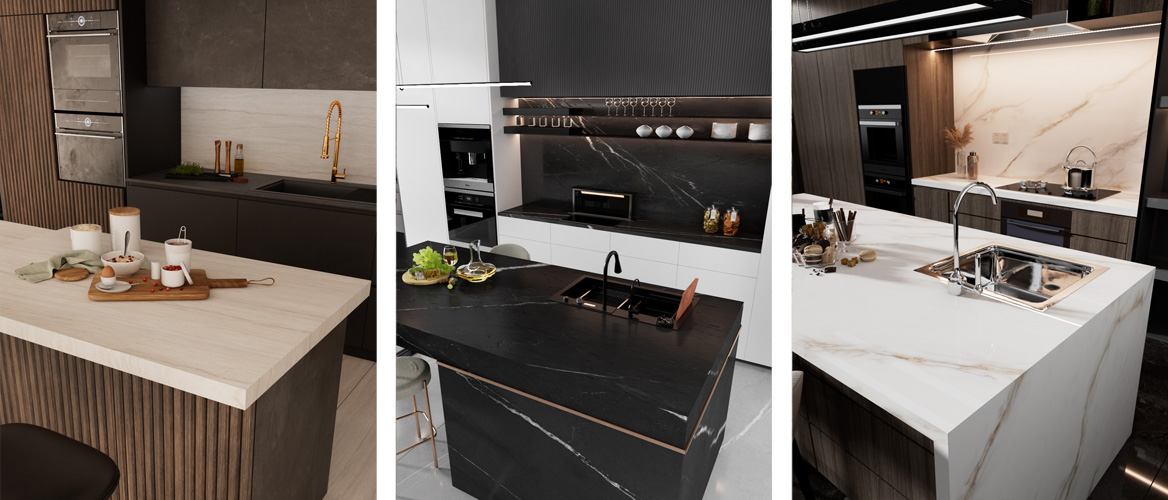
The kitchen is one of the spaces that requires suitable surface coverings for both walls and floors.
For the backsplash area between kitchen cabinets, using a variety of tiles can not only protect the wall but also enhance the overall appearance and style of the kitchen.
For kitchen flooring, it is best to choose a product that combines aesthetic appeal with suitable resistance to foot traffic, stains, and moisture, while also offering a surface appropriate for the conditions of the space.
If you have a small kitchen, using light colors and appropriately sized tiles or ceramic products can help make the space appear larger and more open.
What Is the Best Product for Bathrooms and Restrooms?
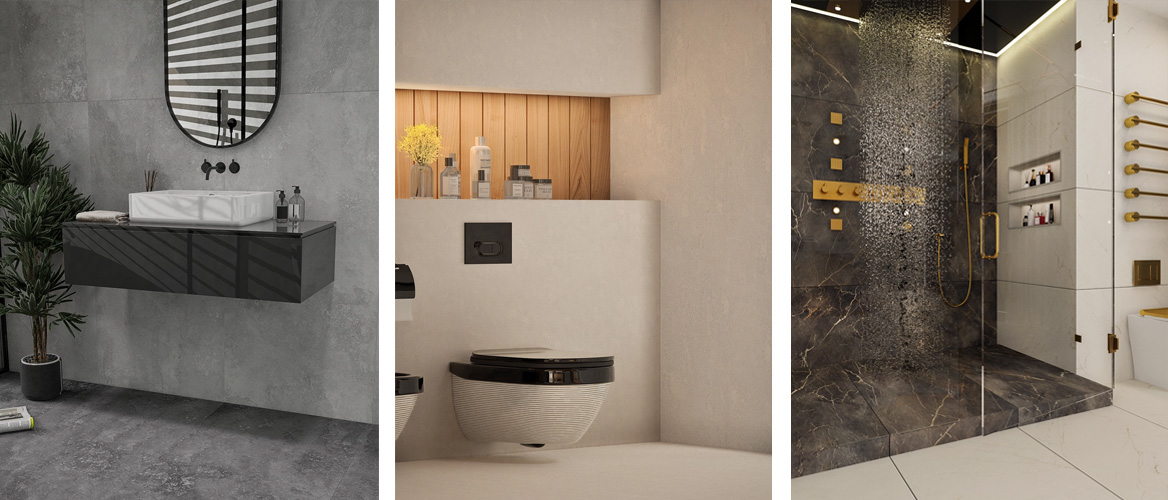
In bathrooms and restrooms, moisture and exposure to water are among the most important factors to consider when choosing the right product.
For walls, suitable wall tiles or ceramic products can be selected based on the conditions of the space. For flooring, in addition to moisture resistance, special attention should be paid to surface slip resistance.
Combining light-colored walls with flooring in a coordinated color and design can make a bathroom or restroom look more modern, spacious, and visually appealing.
What Should You Consider When Buying Tiles and Ceramic Products?
To make the right choice, don't focus only on the price and appearance of the product.
1. Determine the Installation Area
First, determine whether the product will be used for walls, floors, bathrooms, kitchens, living rooms, terraces, or commercial spaces.
2. Choose the Right Size
The product size should be appropriate for the dimensions of the space and compatible with its overall design style.
3. Pay Attention to Technical Specifications
Depending on the intended application, consider factors such as abrasion resistance, water absorption, mechanical strength, slip resistance, and other technical specifications.
4. Coordinate the Color and Design with the Interior
The color of the floor and walls should complement the cabinets, furniture, wall colors, and other elements of the interior design.
5. Check the Surface and Glaze Quality
Before purchasing, check the uniformity of the surface, print and glaze quality, and the absence of visible defects.
6. Calculate the Required Quantity Accurately
When purchasing, it is recommended to order some additional material beyond the exact required area to account for cuts, potential breakage, and future repairs.
Common Mistakes When Buying Tiles and Ceramic Products
Many problems that occur after tile and ceramic installation are caused by choosing an unsuitable product or failing to consider the installation conditions.
Some common mistakes include:
- Choosing a product based only on its appearance
- Ignoring the intended application
- Choosing an unsuitable ceramic product for humid environments
- Failing to consider floor slip resistance
- Choosing an inappropriate size for the space
- Ignoring the product's technical specifications
Conclusion: Tile or Ceramic—Which Is Better?
Ultimately, there is no single answer to the question, “Is tile better than ceramic?” The right choice depends on the application, level of foot traffic, moisture conditions, environment, budget, and interior design style.
If you are looking for a versatile and visually appealing product for kitchen walls, bathrooms, or restrooms, wall tiles can be an excellent choice. For flooring, however, you should select a product whose technical specifications are appropriate for the level of foot traffic and environmental conditions.
When purchasing, in addition to design and price, it is important to consider water absorption, abrasion resistance, slip resistance, size, thickness, and the recommended application of the product.
If you are unsure which tile or ceramic product is right for your space, reviewing product specifications, consulting with Romance Tile experts, and comparing different options can help you make a more confident choice that meets the specific requirements of your project.
Romance Tile — A trusted choice for tiles and ceramic products tailored to your needs and style.