
What Is Porcelain Tile? Features, Advantages, Disadvantages, and Applications
Choosing the right material for floors and walls has a significant impact on the beauty, durability, and overall quality of an interior space. Among the wide range of building materials available, porcelain tile has become a popular choice for residential and commercial projects due to its high density, low water absorption, suitable durability, and wide variety of designs and colors.
But what exactly is porcelain tile? How is it different from conventional ceramic tile? Is porcelain better suited for floors or walls? And what should you consider when purchasing it?
In this article by Romance, we explore the key features, advantages, disadvantages, and applications of porcelain tile.
What Is Porcelain Tile?
Simply put, porcelain tile is a type of ceramic tile with a higher density and lower water absorption than conventional ceramic tile. It can be used in a variety of applications, from interior floors and walls to certain commercial and outdoor spaces.
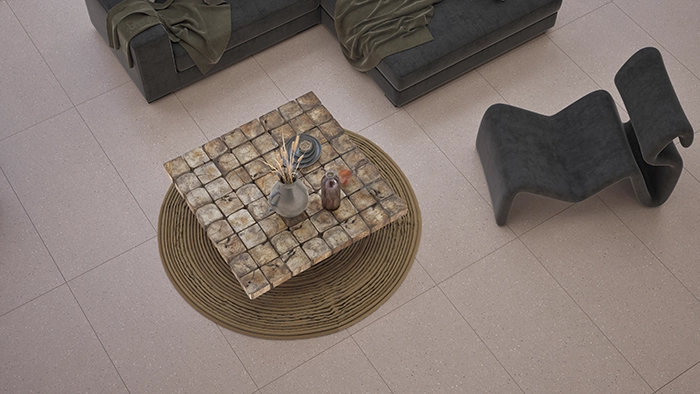
Key Features of Porcelain Tile
1. Low Water Absorption
One of the most important characteristics of porcelain tile is its low porosity and low water absorption. This makes porcelain a suitable option for environments exposed to moisture. However, the product should always be selected according to the relevant standards and the technical requirements of the project.
2. High Density and Durability
The dense body of porcelain tile can provide good resistance to wear and everyday use. For this reason, various types of porcelain tile are widely used for floors and other surfaces in residential and commercial projects.
3. Wide Variety of Designs and Colors
One of the main reasons for the popularity of porcelain tile in interior design is its remarkable variety.
Today, porcelain tiles are available in designs that resemble:
- Natural stone
- Marble
- Onyx
- Concrete
- Wood
- Minimalist and plain designs
This wide range allows designers to choose the desired material without being limited to a particular style.
4. Available in Large Formats
The production of large-format porcelain tiles has made it possible to create more seamless surfaces. Porcelain slabs are an example of these products and are widely used in luxury projects and modern interior designs.
Using large-format tiles can reduce the number of grout lines and create a more uniform and luxurious appearance.
5. Relatively Easy to Clean and Maintain
Many porcelain tile surfaces, when properly selected and installed, are relatively easy to clean. However, factors such as the type of finish—matte, polished, or textured—as well as the type of stain or contamination can affect the appropriate maintenance method.
Is Porcelain Tile Better for Floors or Walls?
The answer depends on the product specifications and the conditions of the project.
For flooring, factors such as abrasion resistance, foot traffic, slip resistance, size, and environmental conditions should be carefully evaluated.
For walls, the weight of the product, installation method, appearance, and coordination with other interior elements become more important.
Therefore, it is not possible to say that one type of porcelain tile is the best choice for every floor or wall. The intended use of the space and the technical specifications of the product should be considered alongside its visual design.
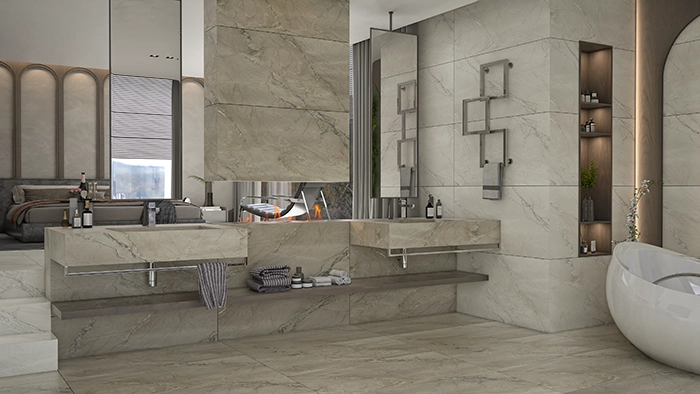
Is Porcelain Tile Suitable for Kitchens and Bathrooms?
Porcelain tile can be a suitable option for kitchens and bathrooms, as these spaces are commonly exposed to moisture, stains, and everyday use.
When choosing porcelain tile for kitchens and bathrooms, it is recommended to consider factors such as:
- Water absorption
- Resistance to stains and cleaning products
- Surface finish
- Ease of cleaning
- Abrasion resistance
- Coordination of the design and color with kitchen cabinets
In modern kitchen design, using stone- and marble-look porcelain tiles, especially in large formats, can create a seamless and luxurious appearance.
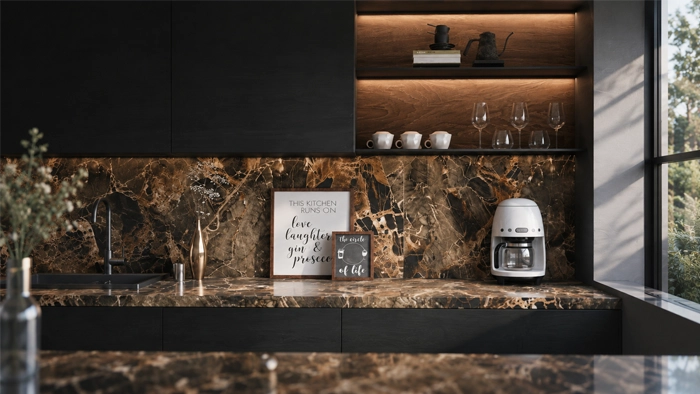
What Is a Porcelain Slab?
A porcelain slab refers to a large-format porcelain product designed for covering extensive surfaces.
One of the main advantages of slabs is that they reduce the number of grout lines and create a more seamless appearance. This feature has made porcelain slabs increasingly popular for feature walls, lobbies, kitchens, countertops, and luxury spaces.
However, installing porcelain slabs requires specialized handling, cutting, surface preparation, and professional installation.
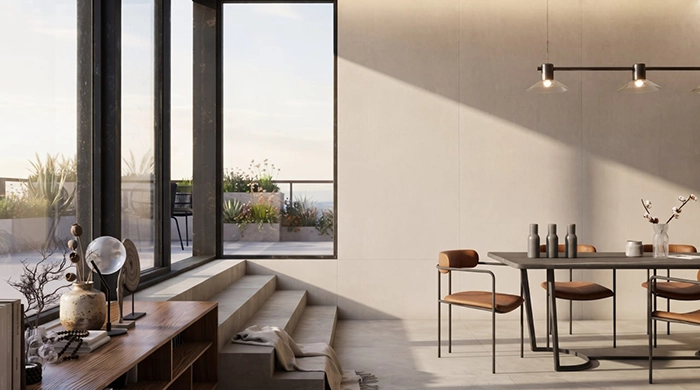
Can Porcelain Tile Replace Natural Stone?
Porcelain tile and natural stone are two different materials, each with its own unique characteristics.
Porcelain can recreate the appearance of natural stone and can be an attractive option for achieving a stone-inspired look in many projects. Natural stone, on the other hand, has its own unique characteristics and natural identity.
Therefore, the choice between the two should be based on budget, design style, technical specifications, maintenance requirements, and project needs.
What Should You Consider When Buying Porcelain Tile?
Intended Use: Determine whether the product will be used for flooring, walls, kitchens, bathrooms, commercial spaces, or another application.
Size: The tile size should be compatible with the dimensions and design of the space. Large-format tiles can create a more seamless appearance, but their installation is also more specialized.
Surface Finish: Whether the surface is matte, polished, glossy, or textured can affect both the appearance and the way the product should be used.
Technical Specifications: Water absorption, abrasion resistance, slip resistance, and other technical specifications should be selected according to the intended application.
Interior Design Coordination: The color and design of the tile should complement the cabinets, furniture, wall colors, and other elements of the space.
Conclusion
Porcelain tile is one of the most widely used materials in modern interior design. However, the best choice is not always the product with the most attractive appearance. Instead, technical specifications, intended application, size, surface finish, and overall design style should all be considered together.
At Romance, we offer a diverse selection of modern ceramic tiles and porcelain slabs designed for a wide range of interior styles and projects. With the right design approach, these products can help create spaces that are beautiful, seamless, sophisticated, and visually striking.