
Installing new tiles over old ceramic is a practical method that, when the substrate is properly prepared and the right adhesive is chosen, can significantly reduce renovation time and the extent of demolition work. But what conditions does this method require, and what points should be considered for a proper installation?
Can New Ceramic Tiles Be Installed Over Old Ones?
Yes, this is possible — provided that the existing tiles are sufficiently strong and firmly bonded to the substrate.
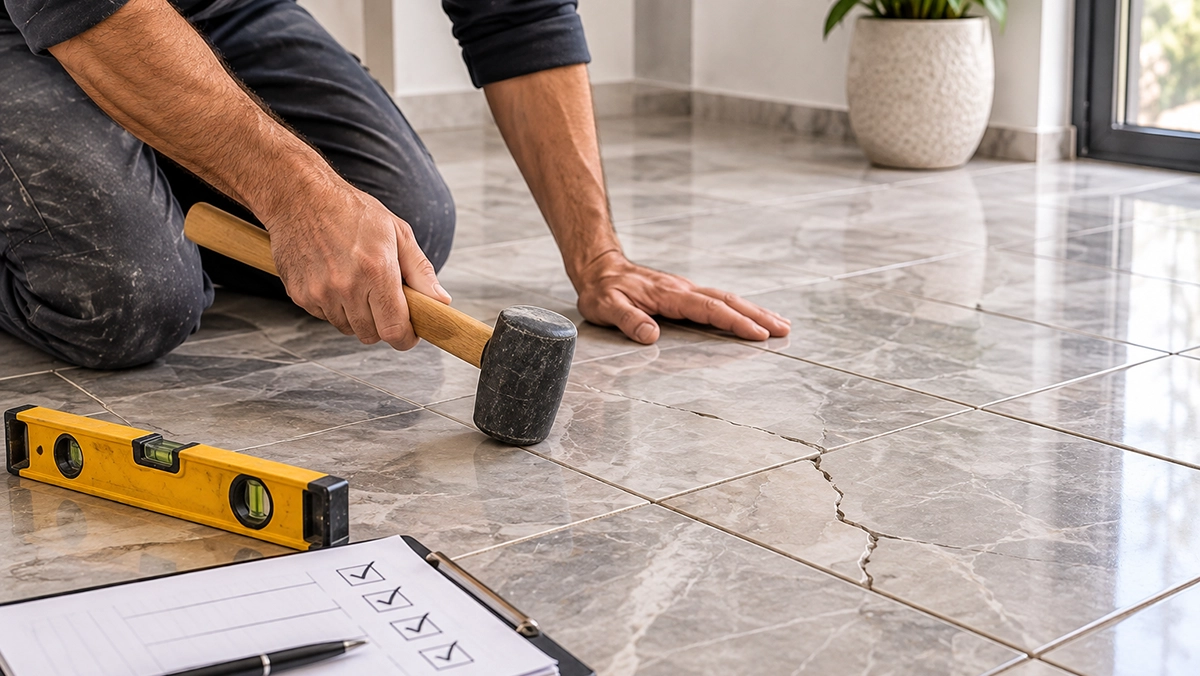
The existing surface must be clean, dry, relatively flat, and free from cracks or loose sections. If the old tiles produce a hollow sound when tapped or show signs of detachment, their condition must be assessed and any defective areas repaired before installing the new layer. Installing new tiles over an unstable substrate can lead to the new layer detaching or cracking.
Advantages of Installing Tiles Over Existing Ceramic
When the substrate is suitable, this method offers several important benefits:
- Reduced demolition: There is no need to completely remove the old tiles.
- Time savings: Some of the demolition and preparation stages are eliminated.
- Less construction waste: The volume of debris generated during renovation is reduced.
- Faster installation: The overall renovation process becomes simpler in many projects.
- Lower environmental impact: Extensive dust and pollution caused by major demolition are avoided.
When Should You Not Install New Tiles Over Old Ceramic?
Before starting the work, the condition of the existing surface must be carefully evaluated. Direct installation of new tiles is not recommended in the following situations:
- Presence of loose or detached tiles
- Extensive cracking or structural damage
- Severe surface unevenness
- Presence of moisture or signs of water infiltration
- Weak or unstable substrate
- Floor height increase that would interfere with the operation of doors, stairs, or floor drains
In these cases, the substrate issues must first be resolved, and only then should the appropriate installation method be decided.
Steps for Installing New Ceramic Tiles Over Old Ones
To achieve a durable result, the following steps must be carried out correctly:
1. Inspection and Surface Preparation
All existing tiles should be checked for cracks, looseness, and detachment. Damaged pieces must be removed and the affected areas repaired with suitable materials.
2. Cleaning and Degreasing
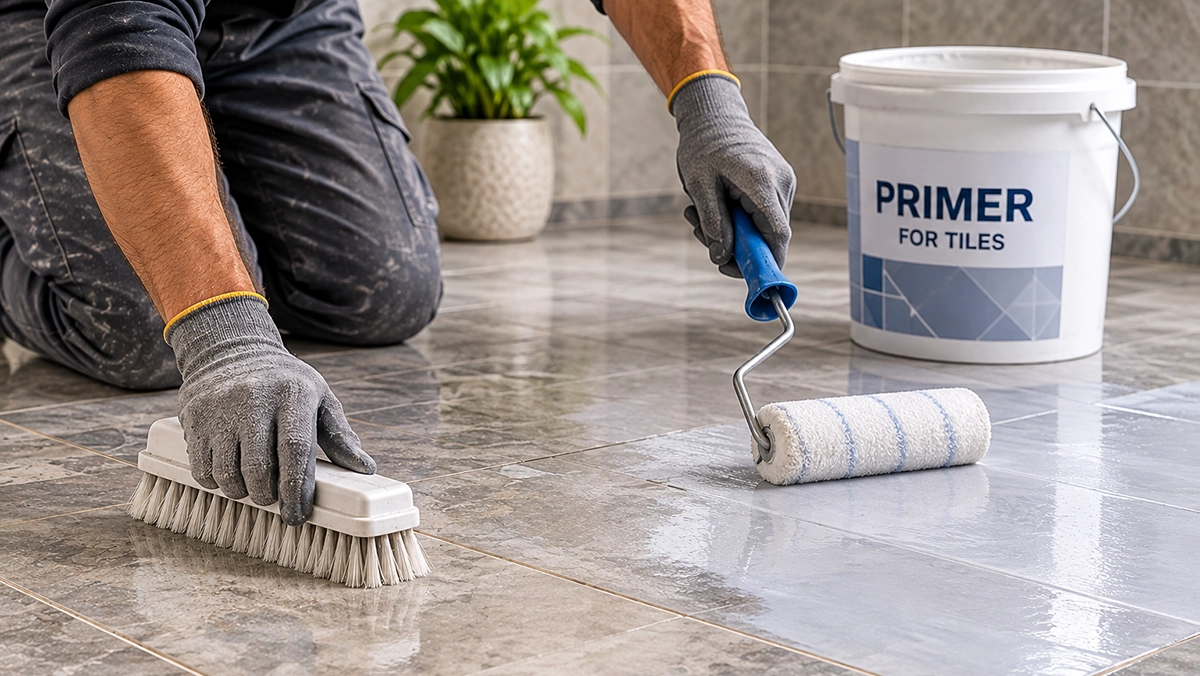
The surface of the old tiles must be thoroughly clean and dry. Dust, grease, wax, cleaning agents, and any other contaminants that could hinder adhesion must be completely removed.
3. Surface Preparation and Primer Application
Glazed ceramic surfaces are typically smooth and low-absorbent. For this reason, additional preparation may be required to achieve proper adhesion. Depending on the type of adhesive and the manufacturer’s instructions, mechanical roughening of the surface and the use of a primer specifically designed for smooth, low-absorbency surfaces may be necessary. The primer must be compatible with the chosen adhesive system.
4. Selecting the Right Adhesive
When installing new tiles over existing ceramic, an adhesive approved for bonding to existing ceramic surfaces must be used. Polymer-modified cementitious adhesives and certain specialized tile-over-tile products can be suitable options, depending on the type of tile, its size, and the project conditions.
5. Installing the New Tiles and Grouting
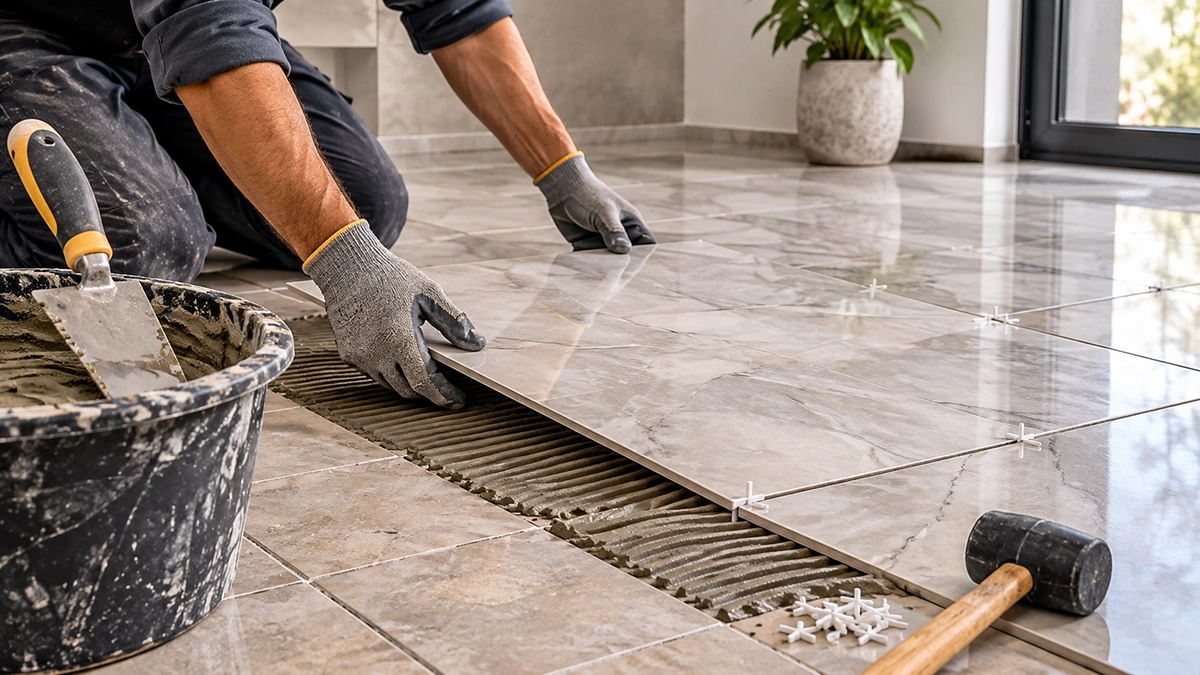
After the surface has been prepared, the adhesive is applied to the substrate according to the manufacturer’s instructions, and the new tiles are set in place. At this stage, attention must be paid to the levelness of the tiles, adequate adhesive coverage on the back of each tile, and the correct joint width. Once the adhesive has cured and within the time specified by the manufacturer, grouting is carried out. Existing movement joints must also be continued through the new layer and should not be sealed with regular adhesive or grout.
Important Considerations Before Installing New Tiles Over Old Ceramic
In addition to the condition of the existing tiles, the following points should also be checked before starting the work:
- Floor height increase: Adding a new layer of tiles may create height differences at room entrances, under doors, and at transitions to other areas.
- Floor drain condition: The height of floor drains and the slope of the floor must be reviewed in relation to the new layer.
- Bathroom and wet-area conditions: Installing new tiles does not replace the waterproofing system; the condition of the moisture barrier must be checked.
- Size of the new tiles: For large-format tiles and porcelain slabs, the choice of adhesive and a specialized installation method become even more critical.
If you plan to use large-format porcelain slabs, we recommend reading the articles Guide to Selecting and Installing Porcelain Slabs for Interior Floors and Walls and Advanced Installation Techniques for Porcelain Slabs.
Frequently Asked Questions About Installing Tiles Over Existing Ceramic
1. Can porcelain tiles be installed over old ceramic?
Yes. Provided the substrate is sound and stable and a suitable adhesive for bonding to existing ceramic surfaces is used, this is possible.
2. Is it always necessary to demolish the old tiles before installing new ones?
No. If the existing tiles are firmly bonded, in good condition, and free from moisture problems, the new layer can be installed directly over them.
3. Is a primer required when installing tiles over old ceramic?
In many installation systems, the use of a primer designed for smooth, low-absorbency surfaces is recommended. However, whether it is necessary depends on the type of adhesive and the manufacturer’s instructions.
Conclusion
Installing new ceramic tiles over existing ones can be a practical and cost-effective solution for renovating floors and walls — provided the substrate is sufficiently strong and the preparation steps are carried out correctly.
Inspecting the condition of the old tiles, thorough cleaning, proper surface preparation, and selecting an adhesive suited to the type of tile are the most important factors for the success of this method. The quality of the workmanship is just as important as the choice of the new tiles, and following technical best practices can result in a beautiful and durable surface.
If you need guidance on selecting the right adhesive or assessing the conditions of your project, you can consult with specialized experts.